Stories about pardons are often about presidential power. But what about people on the other side of that grace? The Coulson family may never receive millions from a wrongful death lawsuit it won years ago.
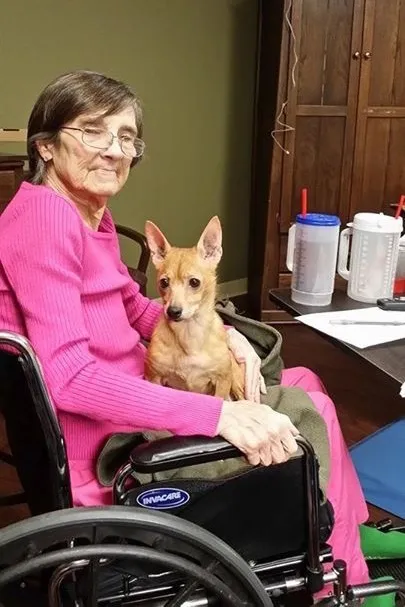
When Amanda Coulson was a child, she visited her mother, Doris Coulson, who worked at a hospital in Little Rock, Arkansas. Doris was a nurse, and one memory remains vivid for her daughter. The medical alarm went off, and suddenly, her mother rushed to a patient’s bedside.
“She jumped into the middle of the bed and started CPR while the patient ran down the hallway,” Amanda Coulson recounted years later in court. “That’s when I realized she wasn’t joking around during her workday.”
That was her mother: someone who understood what it meant to provide high-quality care because she had dedicated her life to it.
After retiring, Doris Coulson became a resident of a nursing home owned by Joseph Schwartz, a New Jersey businessman who was acquiring nursing homes across the country. The staff weren’t supposed to give her solid food, but they did, and she died. Doctors told her family they had found scrambled eggs in her lungs.
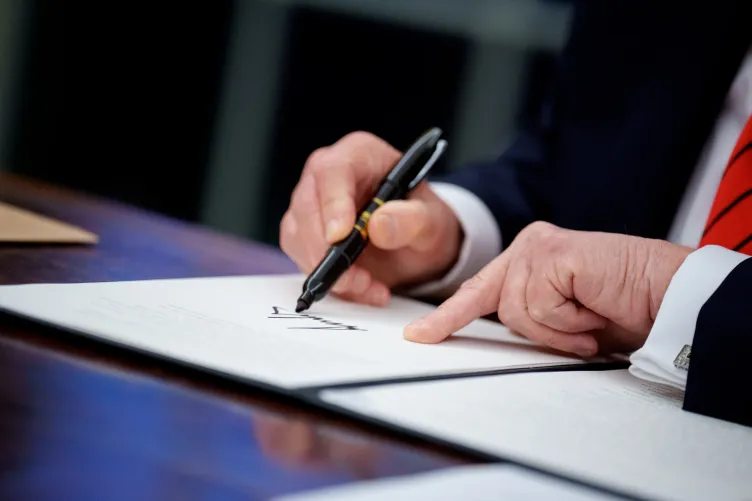
Nine years after Colson’s death, President Donald Trump pardoned Schwartz in a federal case in which he admitted to withholding $39 million in payroll taxes from his employees, money that was earmarked for his nursing home empire, and diverting the funds for other purposes. Schwartz’s lawyers argued that his motive was not personal enrichment, but rather a desire to save his company. The White House stated that Schwartz was an example of “excessive prosecution,” claiming that a third party had prepared his tax returns and that serving his full three-year prison sentence would have been detrimental to someone of his age and health.
Behind this tax evasion charge was a business that, according to victims’ families and lawsuits, caused the negligence, injury, and death of real people.
The Colson family sued Schwartz and his company for involuntary manslaughter. Schwartz did not appear in court to appeal the verdict. Six years ago, a judge awarded Amanda Colson and her sister and brother nearly $19 million in damages. (He later claimed he had not received the essential documents in the case and that he had confused this lawsuit with the same one originally filed in 2017. He maintained that the company that seized the house was the legitimate defendant.) Schwartz paid no money. Amanda has since passed away.
Presidential pardons are often presented as stories of presidential power: who benefited from the pardon, who had the inside information, and who persuaded the president to intervene. But what struck me about Schwartz’s pardon was the suffering of the people most deeply affected by it: people like Doris Coulson and her family, whose lives had already been shattered long before the White House celebrated Schwartz’s first Saturday with his family after his release from prison by Trump, and a senior Justice Department official declared him “free to rebuild his life.”
Schwartz’s pardon came as I was investigating Trump’s wave of pardons, which favored allies, donors, and other influential defendants, including those convicted of serious financial fraud.
But this pardon struck me as different.
To understand the human cost, I turned to court records. In the states where Schwartz owned nursing homes, I found heartbreaking accounts from suffering patients and staff desperately trying to protect them from escalating problems.
The damage wasn’t limited to the workers; it extended to the employees themselves. As the facilities deteriorated, some staff members reported having to buy food for the residents out of their own pockets. Others were left burdened with unpaid medical bills, their insurance premiums deducted from their paychecks without any coverage.
Yet, Schwartz appears to still have money—perhaps a considerable amount. His lobbying filings revealed that he paid more than $1 million to lobbyists to secure a pardon. Even after his company went bankrupt, prosecutors noted that he still possessed $58 million in assets, none of which were registered in his name.
The White House stated that the president does not grant pardons at the request of lobbyists.
After his pardon, Schwartz was forced to return to Arkansas in late December to serve a nine-month prison sentence for Medicaid fraud.
I saw his return as an opportunity to speak with him. The prison administration informed me that I could only contact him by mail. During the first week of January, I sent a letter requesting a meeting by phone, email, or in person, explaining that I could easily travel from my home in Missouri to meet with him.
The Coulson family’s lawyer saw this as an opportunity for a more significant action: subpoenaing Schwartz to testify and obtaining documents that would help determine his assets and compel him to pay the judgments he had ignored.
That opportunity vanished for us immediately. One of Schwartz’s lobbyists was also hired to try to win the case in Arkansas. Three weeks later, the parole board released him.
My letter was returned to me marked “Recipient Unknown.” The lawyer was unable to locate him.
This incident allowed me to understand the story better. At first, I felt I had made a journalistic mistake. But the more I reflected on it, the more I realized that this missed opportunity actually reflected a broader situation. Even after criminal convictions, civil judgments, and years of legal proceedings, Schwartz remained elusive to those seeking the truth or holding him accountable. There was a system in place to mitigate his punishment, but there was no system to help the victims.